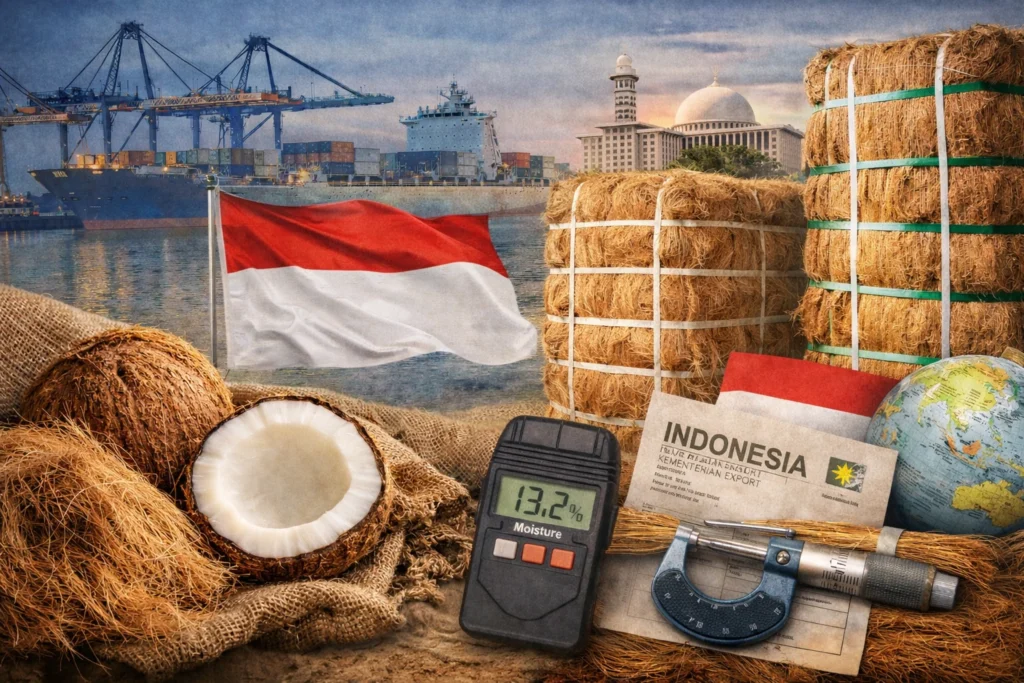
Coconut fiber, also known as coir fiber, has become one of the most in-demand natural materials in the global market. As industries shift toward eco-fsriendly and biodegradable resources, Indonesia’s coconut fiber industry continues to stand out for its quality, consistency, and sustainability. This article explores the reasons why international buyers prefer coconut fiber sourced from Indonesia—covering production processes, quality standards, and export reliability.
Indonesia’s coconut-based industry supports thousands of local farmers and manufacturers while meeting growing demand from global markets such as China, India, Europe, and the Middle East. Let’s explore the unique strengths that make Indonesian coconut fiber a leading export commodity.
Quick View
Understanding Coconut Coir Fiber
Watch this short video to see how Indonesian coconut husks are transformed into durable, high-quality coir fiber for various industrial applications. The footage highlights the process of soaking, separating, and drying fibers using sustainable local techniques.

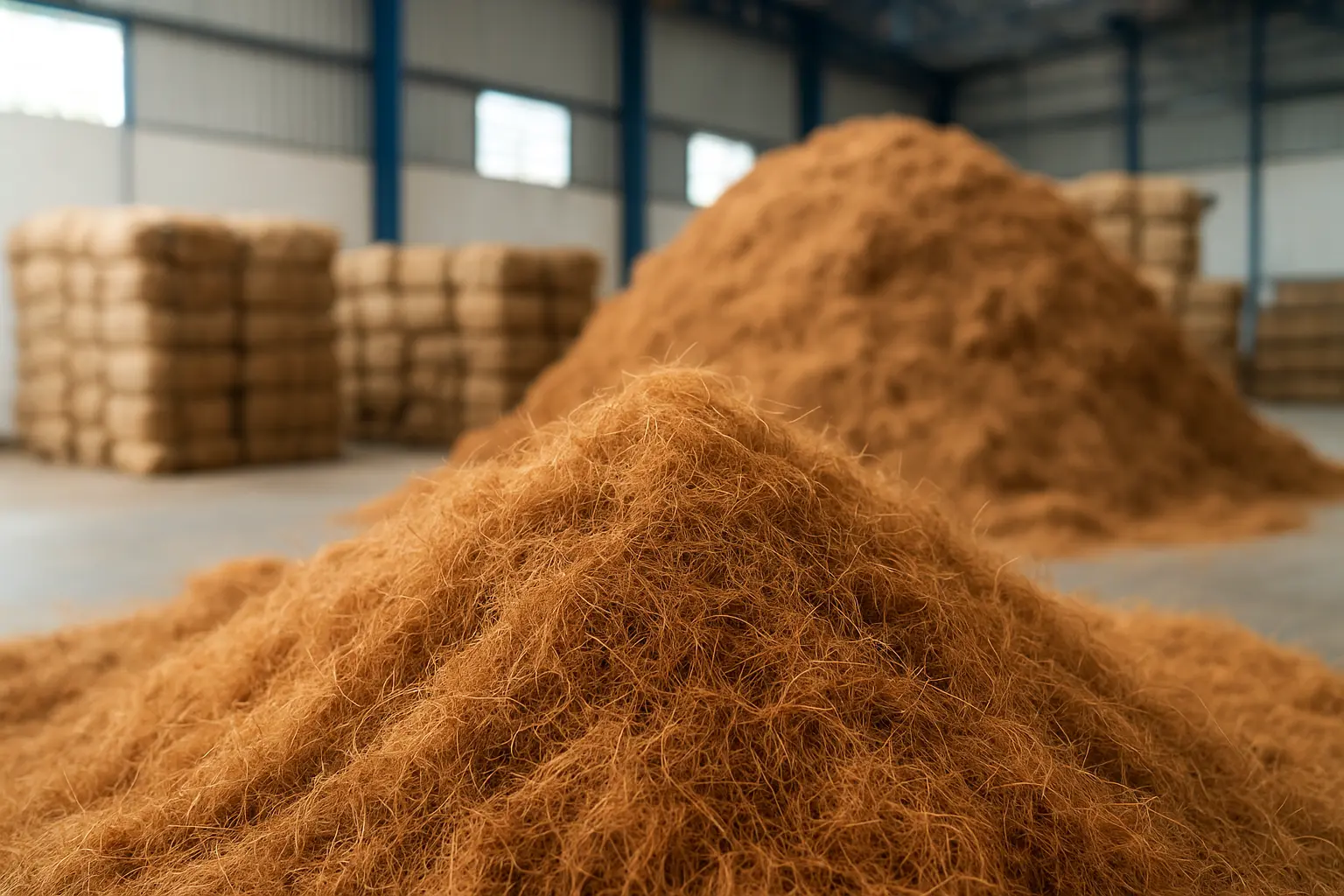
Coir fiber is extracted from the outer husk of mature coconuts. It is naturally resistant to saltwater, decay, and heat—making it an ideal material for products like mats, ropes, mattresses, brushes, and erosion control fabrics. Indonesian coir fiber is widely recognized for its strong tensile strength and natural golden-brown color that meets international standards.
Key Advantages of Indonesian Coconut Fiber
1. High-Quality Raw Material
Indonesia has one of the largest coconut-growing regions in the world, with rich tropical soil and stable climatic conditions. These factors contribute to producing thicker, longer, and stronger fibers compared to those from other tropical countries. The consistent quality of raw materials ensures smooth processing and high fiber yield.
Producers in Indonesia also maintain strict moisture and impurity control during fiber processing. This results in cleaner fibers with uniform length, which international buyers particularly appreciate for manufacturing coir-based products at scale.
The combination of abundant resources and meticulous handling makes Indonesian coconut fiber highly reliable for long-term supply contracts.
2. Sustainable and Eco-Friendly Production
Most Indonesian coir fiber manufacturers operate small-to-medium-scale facilities that follow eco-friendly practices. The fibers are naturally sun-dried, and no harmful chemicals are used in extraction or cleaning processes. This aligns perfectly with the growing global demand for sustainable materials.
By utilizing coconut husks—previously considered agricultural waste—the industry reduces environmental pollution while creating added value for rural communities. This circular economy model enhances Indonesia’s reputation as a responsible supplier.
Many factories are also pursuing ISO and organic certifications, strengthening buyer confidence and compliance with international sustainability standards.
3. Competitive Pricing and Export Efficiency
Indonesia’s integrated logistics network allows for efficient shipment from major ports such as Surabaya, Jakarta, and Belawan. With competitive labor and raw material costs, buyers can access high-quality coir fiber at globally competitive prices.
Exporters like Madika Coconut leverage the logistics expertise of Madika Trans Indonesia to ensure safe loading, container stuffing, and timely delivery. This reduces operational risk for international clients and builds long-term trust.
The combination of cost efficiency and professional handling gives Indonesia a strong position in the global coir fiber trade.
Applications of Indonesian Coir Fiber in Global Industries
1. Erosion Control and Geotextiles
Coir fiber is widely used in erosion control mats and geotextiles because of its natural strength and biodegradability. These products help stabilize slopes, riverbanks, and construction sites while promoting vegetation growth.
Indonesian coir fiber’s uniform texture ensures that geotextile rolls meet engineering standards required by infrastructure projects worldwide. Many buyers from Europe and Asia prefer Indonesian fiber for its balance of durability and environmental safety.
This application continues to grow in importance as countries adopt green construction practices and nature-based engineering solutions.
2. Mattress and Upholstery Industry
The mattress and furniture industries rely on coir fiber as a natural filling material due to its resilience and ventilation properties. When combined with latex or foam, it provides firm support and excellent air circulation—ideal for premium bedding products.
Indonesia supplies millions of kilograms of coir fiber and rubberized coir sheets annually to major mattress manufacturers in India, China, and Europe. Buyers value the product’s consistent density and natural elasticity, ensuring long-lasting comfort.
This segment continues to expand as consumers worldwide shift toward natural home furnishings over synthetic materials.
3. Horticulture and Agricultural Use
Processed coconut coir dust and chips (also known as cocopeat) serve as organic growing media for plants and hydroponic systems. These by-products retain water efficiently while allowing proper aeration, making them ideal for agriculture.
Indonesian producers supply both low-EC and high-EC cocopeat to meet diverse international standards. Buyers from Japan, the Netherlands, and South Korea consistently choose Indonesian suppliers for reliability and compliance.
The growing global demand for organic farming inputs ensures a bright future for Indonesia’s coir-based agricultural exports.
Quality Assurance and Export Standards
1. Consistent Grading and Packaging
Indonesian exporters follow standardized grading systems for brown and white coir fibers, based on fiber length, moisture content, and cleanliness. Most shipments are packed in compressed bales wrapped with PP strapping for safe container transport.
Buyers appreciate the attention to detail in labeling and export documentation, which minimizes customs delays and ensures smooth clearance processes.
Proper grading and consistent packaging enhance the buyer’s confidence and repeat purchasing behavior.
2. Compliance with International Regulations
Reputable Indonesian exporters comply with key international trade and phytosanitary requirements. Documentation such as Certificates of Origin, Fumigation Reports, and SGS Inspection Certificates are routinely provided.
These practices guarantee that shipments meet destination-country regulations and maintain product integrity upon arrival.
Strong compliance management also positions Indonesia as a trusted long-term supplier for multinational buyers.
3. Role of Integrated Logistics
Madika Trans Indonesia provides a complete logistics service covering inland trucking, port handling, and international shipping. This integration ensures that buyers experience a seamless purchasing process from order to delivery.
With professional export handling, buyers can expect minimized risks related to cargo damage or delays. This efficiency is one of the strongest reasons why Indonesian suppliers remain competitive.
As part of the Madika Group, Madika Coconut combines production, quality control, and logistics expertise—offering a full-service export solution.
If you are already comparing technical standards and export readiness, understanding detailed specifications can help you make more confident sourcing decisions. We recommend reading our in-depth guide on coconut fiber export specifications, which explains moisture limits, fiber grading, impurity control, packaging methods, and buyer requirements across key global markets.
FAQ – Indonesian Coconut Fiber Export
What is the standard specification for export-grade coconut fiber?
Export-grade coconut fiber typically has a moisture content below 15%, fiber length between 5–25 cm, and minimal impurities. The color ranges from light to golden brown depending on the drying process.
Which countries import the most coconut fiber from Indonesia?
Major importers include China, India, South Korea, Japan, and several European nations. Demand from the Middle East and Africa continues to grow for geotextile and mattress applications.
What packaging types are used for coconut fiber exports?
Coconut fibers are compressed into 100–125 kg bales wrapped in PP strapping or shrink film for easy stacking and efficient container loading.
How is the quality of coir fiber maintained during shipment?
Indonesian exporters ensure proper moisture control, fumigation, and palletizing. Third-party inspections such as SGS are conducted before shipment to verify quality.
Can buyers request mixed container shipments?
Yes. Buyers can combine coir products such as fiber, rope, and cocopeat in one container. Madika Coconut provides flexible packing and documentation support for such requests.
Final Reflections: Indonesia’s Advantage in Sustainable Fiber Exports
The global demand for eco-friendly materials continues to rise, and Indonesia’s coconut fiber industry is perfectly positioned to meet that need. Its combination of abundant resources, sustainable practices, and reliable logistics gives it a long-term competitive edge in the natural fiber market.
Buyers seeking high-quality, sustainable, and traceable coir fiber products consistently turn to Indonesia as their preferred sourcing destination. With Madika Coconut and Madika Trans Indonesia working together, international partners can expect not only premium-grade products but also world-class export handling.
Discover more about our fiber-based solutions by visiting our product page: Coconut Coir Fiber (Brown Fiber Grade) or send us your inquiry via Request a Quote.